Custom Plastic Enclosures: Design Considerations for Electronics Protection
In today's electronics industry, the enclosure is just as important as the components inside. At CDCOMPOSITE, we specialize in custom plastic enclosures that provide optimal protection while meeting aesthetic and functional requirements.
Why Plastic Enclosures?
Advantages Over Metal
| Factor | Plastic | Metal |
|---|---|---|
| Weight | Lighter | Heavier |
| Cost | Lower | Higher |
| Corrosion | Immune | Susceptible |
| RF Transparency | Yes | No |
| Design Freedom | High | Limited |
| Tooling Cost | Lower | Higher |
Common Applications
- Consumer electronics
- Industrial controls
- Medical devices
- Telecommunications
- Automotive electronics
- IoT devices
Material Selection
ABS (Acrylonitrile Butadiene Styrene)
Properties:
- Good impact resistance
- Easy to process
- Excellent surface finish
- Cost-effective
Best for: Consumer electronics, general-purpose enclosures
Polycarbonate (PC)
Properties:
- Superior impact resistance
- Optical clarity available
- High heat resistance
- UL94 V-0 rated options
Best for: Safety-critical applications, outdoor use
PC/ABS Blend
Properties:
- Combined benefits of both materials
- Excellent balance of properties
- Good chemical resistance
- Easy processing
Best for: Demanding applications requiring multiple properties
Nylon (PA)
Properties:
- High strength and stiffness
- Excellent wear resistance
- Good chemical resistance
- Higher temperature capability
Best for: Structural applications, harsh environments
IP Rating Considerations
Understanding IP Codes
The IP (Ingress Protection) rating indicates protection level:
First digit (Solids):
- 0: No protection
- 5: Dust protected
- 6: Dust tight
Second digit (Liquids):
- 0: No protection
- 4: Splash resistant
- 5: Water jet resistant
- 6: Powerful water jet resistant
- 7: Immersion up to 1m
- 8: Continuous immersion
Achieving IP Ratings
Design features for sealing:
- Gasket grooves: For O-ring or foam gaskets
- Tongue and groove: Interlocking seal surfaces
- Ultrasonic welding: Permanent sealing
- Potting: Complete encapsulation
Design for Manufacturing
Wall Thickness
- Uniform thickness: Prevents warping and sink marks
- Typical range: 1.5-3.0mm for injection molding
- Ribs: For added strength without thick walls
Draft Angles
- Minimum: 1° for smooth surfaces
- Textured surfaces: 1.5-2° additional per 0.025mm texture depth
Undercuts
- Avoid when possible: Increases tooling cost
- Solutions: Side actions, collapsible cores, split molds
CDCOMPOSITE Capabilities
Design Services
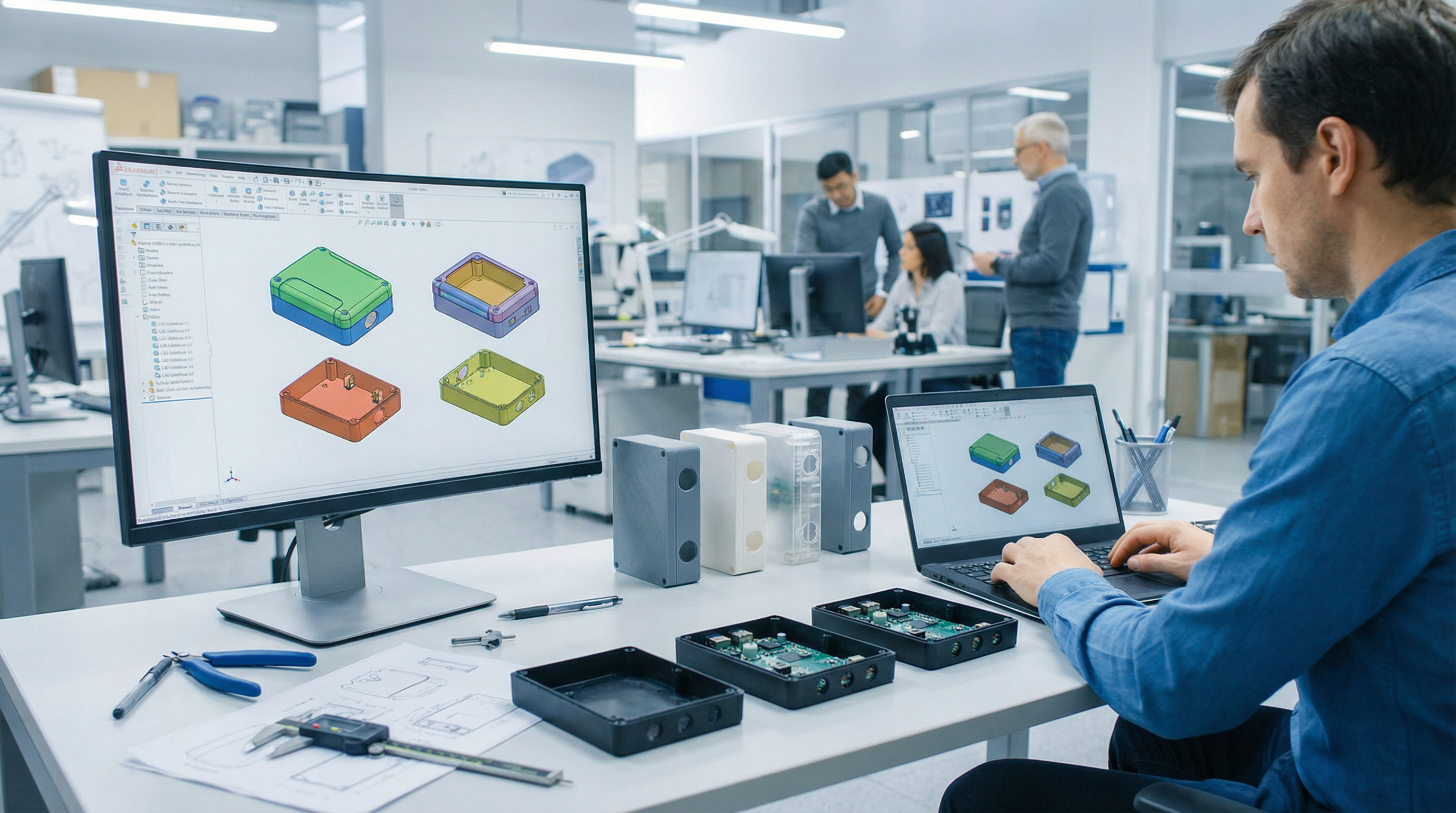
- 3D CAD modeling
- DFM (Design for Manufacturing) analysis
- Prototype development
- Material selection guidance
Manufacturing
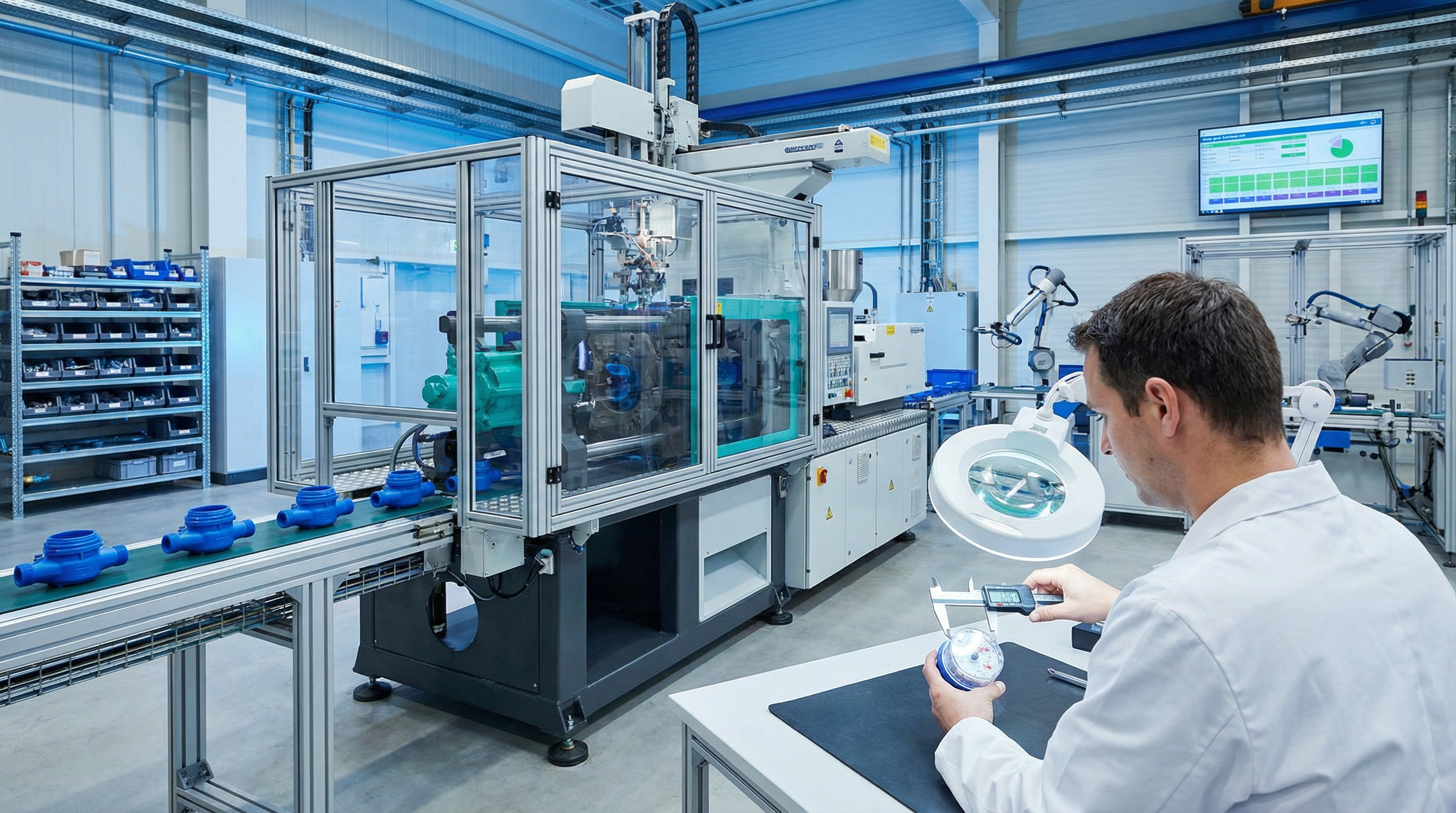
- Injection molding
- CNC machining for prototypes
- Secondary operations (printing, assembly)
- Quality inspection
Value-Added Services
- EMI/RFI shielding
- Gasket installation
- Hardware insertion
- Complete assembly
[Image blocked: Custom Plastic Enclosures]
Start Your Project
Ready to develop a custom enclosure? CDCOMPOSITE offers:
- Free design consultation
- Rapid prototyping
- Competitive production pricing
- Quality assurance
Contact us today to discuss your enclosure requirements.